
Men’s Issues
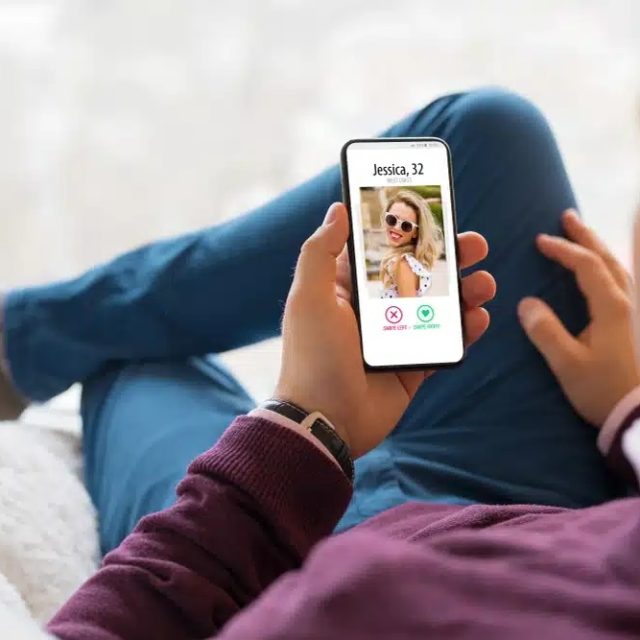
As online dating became a cultural phenomenon in many countries, beliefs about dating apps and the people who use them spread alongside tales of success and failure. This series of articles will consider some motivations for online dating, as well as the potential benefits and drawbacks, and will attempt to come to reasonable conclusions about how to approach online dating. This first article will examine why men might be motivated to turn to online dating to meet potential partners. The next two articles will consider challenges that men face when using dating apps. The final article will offer recommendations for achieving balance when using dating apps.
Online dating is not a new phenomenon. The first extant online dating site, Match.com, was launched almost 30 years ago in 1995 (Bonilla-Zorita et al., 2021) when the Internet was still unknown to much of the world. Access to these dating sites in 1995 required that you sit at a computer with an internet connection and open a web browser. Modern widespread use of smartphones and social media brought new and easy to access online dating options into the mainstream. Most modern online dating sites have mobile apps which can be downloaded to a phone. Therefore, this series of articles uses the terms online dating and dating apps interchangeably.
Prior to online dating, most people met romantic partners in person, whether at work, at school, at church, or in the checkout line at the grocery store. People continue to meet organically in those ways (among others). But since the advent of online dating in 1995, a significant number of relationships have begun via online meetings. One study estimated that between 1995 and the year 2012 as much as a third of couples who were married in the United States met online (Jung et al., 2019). Other studies have suggested that as many as 40% of singles go searching for partners online and that up to a quarter of all new couples meet online (Castro & Barrada, 2020).
With so many people turning to online dating, men who were previously hesitant to do so have taken the plunge, hoping to increase their chances of finding a partner.
If you are reading this article, it is likely that you are among the 40% of the Canadian population who are single (Strugo & Muise, 2019). And as pointed out above, a large number of single people look to online dating to meet potential partners. For single men, it might be exciting to have access to partners who they may not meet in typical day-to-day settings (Alexopoulos et al., 2020).
Dating apps such as Tinder have a reputation in some circles for being primarily useful for casual sexual relationships. However, this reputation is not supported by research, which has repeatedly found that people use Tinder and other dating apps to start diverse types of relationships. These include long-term relationships, short-term relationships, hookups, friendships, and connections
with locals while travelling (Strugo & Muise, 2019; Castro & Barrada, 2020).
Dating apps also help those who face difficulties dating because of their sexual orientation and/or identity. Before Tinder was launched and entered the mainstream, online dating was popular among the gay community. Apps such as Grindr opened new avenues for individuals who previously faced difficulties dating because of a combination of minority status and stigma (Castro & Barrada, 2020).
Another minority group that has benefited from dating app usage is people who are seeking non-exclusive, non-monogamous, or polyamorous relationships. In one study, it was found that dating apps introduced individuals to the possibility of being open about sexual non-exclusivity (Newerla & van Hooff, 2023). The same study also found that for others, putting this preference on their dating profile allowed them to be transparent with potential partners.
Some men who want to date face ambivalence. On the one hand, they have a strong desire to find a partner. On the other hand, they struggle with confidence or anxiety. For some, social anxiety already makes navigating friendships and work difficult. The possibility of eliminating such anxiety when dating can be very tempting.
One of the behaviours that people use to manage anxiety is avoidance (Beck & Hindman, n.d.). Some men turn to online dating to avoid the awkwardness of expressing interest in someone who might already have a partner. Also, mutual matching on an app means that the other user might already find them attractive, thus allowing them to avoid rejection from someone who might not like them. For men with anxiety, dating apps might provide a sense of safety (Coduto et al., 2020). The accuracy of that assumption will be examined in a later article.
In this article, we examined the prevalence of dating app usage and explored reasons why men might turn to dating apps in their efforts to find a partner. This article focused on the potential advantages of dating app use. Another article in this series will examine some challenges and risks associated with online dating as borne out by research. Before looking at the research however, the following article will provide a primer for understanding psychology research and managing expectations when using dating apps.
Alexopoulos, C., Timmermans, E., & McNallie, J. (2020). Swiping more, committing less: Unraveling the links among dating app use, dating app success, and intention to commit infidelity. Computers in Human Behavior, 102, 172–180. https://doi.org/10.1016/j.chb.2019.08.009
Beck, J. S., & Hindman, R. (n.d.). COPING WITH ANXIETY. In Beck Institute for Cognitive Behavior Therapy. https://beckinstitute.org/wp-content/uploads/2021/08/Coping-with-Anxiety.pdf
Bonilla-Zorita, G., Griffiths, M. D., & Kuss, D. J. (2021). Online dating and problematic use _ a
systematic review. International journal of mental health and addiction, 19, 2245-2278.
Castro, Á., & Barrada, J. R. (2020). Dating apps and their sociodemographic and psychosocial correlates: A systematic review. International Journal of Environmental Research and Public Health, 17(18), 6500.
Coduto, K. D., Lee-Won, R. J., & Baek, Y. M. (2020). Swiping for trouble: Problematic dating application use among psychosocially distraught individuals and the paths to negative outcomes. Journal of Social and Personal Relationships, 37(1), 212-232.
Newerla, A., & van Hooff, J. (2023). Mobile intimacies? Uncertainty, ambivalence and fluidity in the intimate practices of dating app users in Germany and the UK. Sexualities, 13634607231168959.
Strugo, J., & Muise, A. (2019). Swiping for the right reasons: Approach and avoidance goals are associated with actual and perceived dating success on Tinder. The Canadian journal of human sexuality, 28(2), 93-104.