
Men’s Issues
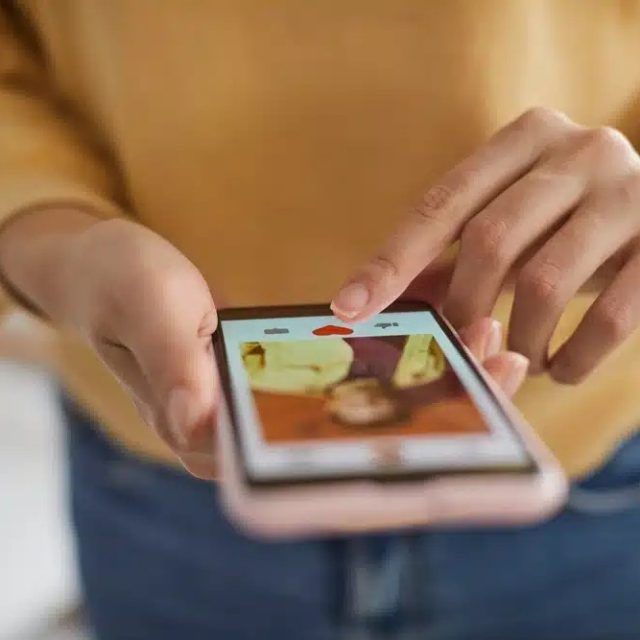
Dating apps offer a wide array of potential benefits to users. The first article in this series examined some of these benefits. The second article was a primer on managing expectations while using dating apps. This article will examine common challenges that men face when using dating apps. It will also identify some risks, supported by research, of online dating.
As mentioned in the previous article, one dating trend that can result in negative experiences for men is the tendency for women on dating apps to be far more selective than their male counterparts (Dinh et al., 2022). Dinh et al. explain that female selectivity is a product of their evolutionary development. It applies when dating online or offline. However, the perceived abundance of partners on dating apps may result in even greater selectivity in women (Alexopoulos et al., 2020). Conversely, Alexopoulos et al. point out that men are less selective when they think that there is an abundance of partners. However, the seeming abundance is deceptive and ultimately leads to disappointment when the number of matches fall short of mens’ expectations.
An interesting side effect of men being less selective when swiping or contacting women online is that women have a higher number of matches and conversations compared to men (Castro & Barrada, 2020; Timmermans & Courtois, 2018). While this might seem enviable, it too has its drawbacks. Being presented with a large number of potential partners can lead to choice overload (Thomas et al., 2022), a.k.a. the tyranny of choice. Therefore, women are more likely to feel overwhelmed when using dating apps. This further affects men since they may become discouraged from a lack of responses from their overwhelmed matches.
A study that examined links between mobile dating app use and self-esteem showed that male Tinder users, in particular, reported significantly lower self-esteem compared to non-users (Alexopoulos et al., 2020). Some researchers concluded that dating app users contend with lower self-esteem when faced with perceived partner abundance (Thomas et al., 2022). They suggest that the reason for this is that perceived availability of partners results in increased fear of being single. Users might tell themselves that there are so many people on this app that something must be wrong with them to be receiving so few matches, or that they are doing something wrong in the process.
While this initial research suggests that online dating experiences are correlated with self-esteem, we cannot automatically conclude that online dating causes lower self-esteem. However, some experimental research has found evidence to support the conclusion that excessive dating profile browsing actively contributes to decreased self-esteem (Thomas et al., 2022). More research is required to explain precisely why this is the case, and in the absence of a more detailed explanation, the impact on self-esteem should be viewed as a risk.
The first article in this series highlighted that some men turn to dating apps to reduce anxiety about approaching partners in social settings. Research shows that people who have difficulty with social interactions or who have underdeveloped skills resulting in social anxiety tend to prefer online interactions (Coduto et al., 2020). This preference is due to their perception of online interactions as being safer than face-to-face interactions.
Additionally, individuals with social anxiety tend to suffer from loneliness (Castro & Barrada, 2020), which drives them to keep trying to find a partner. This combination of loneliness and a preference for online interaction can lead to the overuse of dating apps. Ultimately, this results in feelings of guilt and other negative emotionals related to the constant and unregulated use of dating applications (Coduto et al., 2020). This can create a vicious cycle where anxiety about being single results in increased app use, which in turn results in guilt and anxiety about spending too much time on dating apps.
People who use dating apps have greater access to potential partners than those who do not. And when used while in a relationship, dating apps serve as a constant reminder that other potential partners are within your immediate vicinity (Alexopoulos et al., 2020). This situation is exacerbated by a fact uncovered by other research, that people who found their romantic partner on a mobile dating app might be particularly likely to continue their quest for a relationship, despite already being in a committed relationship (D’Angelo & Toma, 2017).
This article examined some of the potential pitfalls of online dating. Online dating is not without risk, therefore precautions are warranted. The final article in this series will offer recommendations for managing the risks associated with dating app use, while still working towards the ultimate goal of finding a partner.